Introduction
Students today are not just studying problems in textbooks — they are solving them. From combating bullying in schools to delivering over one million face shields during a pandemic, young people across India and globally are reshaping communities through hands-on action. According to the World Economic Forum, 83% of young people across 140 countries view the world as "full of opportunity" and 74% feel empowered to act on issues they care about.
If you are ready to move from awareness to action, this guide covers what makes a social innovation project actually work — with concrete ideas, real student examples, and a practical process to build your own solution.
Key Takeaways
- Social innovation projects solve real community problems through creative, hands-on solutions
- Top impact areas: environment, health access, education equity, community empowerment, inclusion
- The strongest projects address problems you personally observe or experience
- Real student examples show that a clear problem statement and willingness to build matter more than a big budget
- Structured programs with makerspaces provide tools, mentorship, and community to prototype working solutions
What Is a Social Innovation Project (and Why Students Should Care)
Social innovation is the process of developing novel solutions — products, services, models, or campaigns — that address social, environmental, or community problems more effectively than existing approaches. According to Stanford's Center for Social Innovation, these solutions often require collaboration across government, business, and civil society.
The key difference from regular school projects? Your goal isn't just a grade — it's measurable positive change for real people.
Why Students Are Uniquely Positioned
Students live closest to many of the problems — in schools, neighborhoods, cities. You're not bound by institutional risk-aversion, and you bring fresh perspectives and energy that established organizations often can't mobilize quickly.
The evidence backs this up. UNICEF's Venture Fund has supported thousands of young entrepreneurs across 86 countries with over $11.5 million in catalytic funding — proof that student-led innovation creates real-world impact, not just classroom credit.
Using the UN Sustainable Development Goals as Your Compass
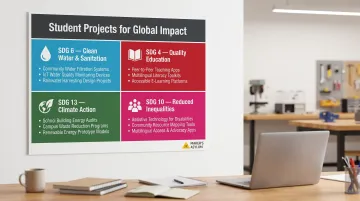
The 17 UN Sustainable Development Goals (SDGs) provide a useful framework for finding your focus. Several map directly onto problems you can tackle at a project level:
- Clean Water (SDG 6) — filtration systems, water monitoring tools, community access solutions
- Quality Education (SDG 4) — learning aids, peer teaching platforms, literacy tools
- Climate Action (SDG 13) — energy audits, waste reduction campaigns, local carbon tracking
- Reduced Inequalities (SDG 10) — assistive tech, access programs, community resource mapping
Pick one goal, narrow it to a specific local problem, and you already have a project brief worth building on.
Social Innovation Project Ideas Across Key Areas
The following categories organize common social challenges students can address using a mix of skills — from coding and hardware-making to community organizing and design thinking. Projects don't have to be high-tech; what matters is that they address a genuine need.
Sustainability and Environment
Project Ideas:
- Community composting system with IoT-based waste tracking - Use sensors to monitor compost health and waste diversion rates, providing real-time data to municipalities or schools
- Solar-powered water purification device for rural households - Build low-cost filtration units powered by small solar panels, addressing water scarcity in peri-urban and rural communities
- Neighborhood plastic-collection program paired with upcycled product-making - Organize collection drives and transform waste into usable items like planters, benches, or art installations
India generates approximately 4.1 million tonnes of plastic waste annually, with significant gaps in recycling infrastructure. Meanwhile, India has 18% of the world's population but only 4% of its water resources, making water-focused innovations especially urgent.
Environment-focused projects are strong additions to university portfolios. Competitions like the Atal Innovation Mission's ATL Marathon specifically challenge students across India to prototype solutions for community environmental problems — making this category a natural fit.
Health and Wellbeing
Project Ideas:
- Low-cost assistive device for people with mobility challenges - Design and build simple mechanical aids like customized crutches, walkers, or accessible door handles
- Mental health awareness campaign with peer-support modules for schools - Develop structured programs where trained student volunteers facilitate safe conversations around depression and anxiety
- Telehealth information resource for underserved communities - Create low-bandwidth text or voice-based platforms connecting rural patients with health advisories
These projects can range from physical devices to awareness-driven interventions. Health-focused projects are increasingly valued in Indian social entrepreneurship competitions. Before designing your solution, speak directly with community health workers or school counselors to understand the real gaps — not just what you assume people need.
According to India's Ministry of Health, 70% to 92% of people with mental disorders do not receive proper treatment — a gap driven by lack of awareness, stigma, and a severe shortage of professionals.
Education Access and Equity
Project Ideas:
- Peer tutoring program for first-generation learners - Organize structured sessions where senior students mentor younger peers struggling with foundational concepts
- Low-bandwidth e-learning resource for students in areas with poor connectivity - Develop offline-first mobile apps or SMS-based learning modules for subjects like math or science
- Game-based learning materials using physical manipulatives - Build hands-on teaching tools (puzzles, models, circuit kits) for subjects like geometry, electronics, or biology
ASER 2024 data shows that in rural India, 82.2% of teens aged 14-16 know how to use a smartphone, but only 57% use it for studies. This gap reveals opportunity: digital access exists, but relevant, engaging content is missing.
Physical education kits or manipulatives built in a makerspace can be as impactful as software apps — and often more accessible in low-resource settings where electricity and internet are unreliable.
Community Empowerment and Inclusion
Project Ideas:
- Local business directory app for underserved traders - Help small vendors gain visibility through simple mobile platforms listing products, hours, and contact details
- Sign language translation tool or prototype - Develop visual communication aids or basic gesture-recognition software to support deaf and hard-of-hearing individuals
- Anti-bullying reporting system for schools - Create anonymous reporting mechanisms that empower students to speak up safely
The Kavach app, developed by Anoushka Jolly when she was just 13, is a powerful example. Kavach allows students and parents to report bullying incidents anonymously. Anoushka later appeared on Shark Tank India and received ₹50 lakh funding, and her platform now serves over 2,000 students from 100+ schools.
The most overlooked groups often hold the most unaddressed problems. Elderly residents, people with disabilities, and migrant workers rarely get asked what they need — start there.
Real-World Social Innovation Examples Started by Students
Global Youth-Led Projects
Project 30,000 Hours (Malaysia): Founded by student Shu Xin, this initiative restores access to online learning for low-income students in Malaysia. In 2021, the project successfully raised funds and donated electronic devices to students in Perak, addressing the digital divide exacerbated by the pandemic.
TutorBridgeSCHS (USA): Started by Rishita Rokariya, TutorBridge hosts free tutoring sessions in Reading, Mathematics, and Science for students who need extra academic help. The broader TutorBridge organization has benefited over 12,750 tutors and tutees across 10 library and school locations.
Microphone Initiative (South Korea): Founded by Seokhyun Baek, this Gen-Z-led nonprofit teaches the SDGs to students across 30+ countries, helping them launch their own social impact projects and combating age-based discrimination.
Closer to Home: Maker's Asylum During COVID-19
During the COVID-19 pandemic, Maker's Asylum delivered over one million face shields in just 49 days using open-source design and decentralized manufacturing. The initiative activated 42 cities, towns, and villages across India — a model where one central design was built locally by hundreds of makers, students included.
The Common Thread
None of these founders waited to become experts. They identified a gap, started with what they had, involved their community, and kept iterating. That pattern — identify, prototype, test, repeat — shows up in every example above, from a Malaysian student raising device donations to a Goa-based makerspace coordinating a million face shields.
What made these projects succeed beyond good intentions?
- Clearly defined problem
- Specific beneficiary group
- Testable prototype or program
- Feedback loops built in
These are the same elements you'll need when designing your own project.
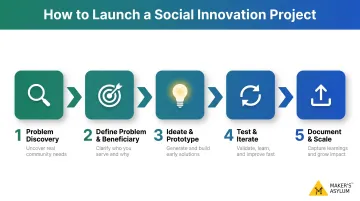
How to Launch Your Social Innovation Project: Step by Step
Step 1 — Problem Discovery
Start by observing your immediate environment rather than searching for "big" issues. Techniques like community walks, conversations with local stakeholders (shopkeepers, teachers, elderly neighbors), and SDG-mapping exercises help uncover genuine unmet needs.
Caution: Don't design a solution before truly understanding the problem. According to Stanford's Design Thinking framework, empathy is the centerpiece of human-centered design — engaging with people directly is the primary way to uncover real insights.
Step 2 — Define the Problem and Beneficiary
Write a clear problem statement: "Who is affected, by what, under what conditions, and what is the current gap?"
Example:
- ❌ Too broad: "Students everywhere struggle with math"
- ✅ Specific: "First-generation Class 9 students in government schools in Pune lack access to after-school math tutoring due to cost and transportation barriers"
Narrowing the scope makes the project more actionable and measurable.
Step 3 — Ideate and Prototype
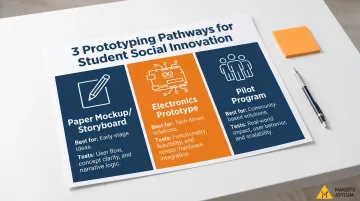
Brainstorm broadly, then prototype quickly. Early prototypes don't need to be polished — they need to be testable. Options include:
- A paper mockup or storyboard
- A rough Arduino-based device or electronics circuit
- A small pilot program run with 5–10 participants
Physical prototyping (using tools like 3D printers, laser cutters, or basic electronics kits) reveals constraints and possibilities that theoretical planning simply cannot. What looks straightforward on paper often breaks down in practice — and that's exactly the point.
Step 4 — Test With Real Users and Iterate
Return to your community with your prototype — this is the step that separates projects that work from projects that merely look good on paper. Structured interviews, observation, and simple surveys help you refine your solution and prove its value.
Ask:
- Does this actually solve the problem you identified?
- What works well? What's confusing or broken?
- Would people use this without your presence?
Step 5 — Document and Scale
Once you've iterated based on real feedback, document everything: materials, costs, outcomes, and lessons learned. This transforms a one-time project into something replicable. It also builds a portfolio that universities and employers recognize.
Share your work openly through:
- Open-source documentation (GitHub, Instructables)
- Social media (Instagram, LinkedIn, YouTube)
- Competitions and showcases
Projects shared openly often find unexpected partners — another student across the country, an NGO with funding, or a mentor with the exact expertise you need.
Building Your Project With the Right Tools and Mentorship
The biggest barrier most students hit isn't ideas — it's access. Access to equipment like 3D printers, laser cutters, and electronics. Access to mentors who understand both making and social impact. And access to peers working on similar challenges.
Structured programs that combine problem-based learning with physical tools can accelerate your journey from idea to working prototype. At Maker's Asylum's SDG School, students work on real-world projects anchored in the Sustainable Development Goals, with access to labs, open-source tools, and mentorship from experienced makers. The community spans 40+ countries, so students regularly collaborate with peers globally on problems that matter locally.
Competitions, Grants, and Recognition
Strong social innovation projects open doors. Relevant India-based opportunities include:
- Atal Innovation Mission (AIM) - 10,000+ Atal Tinkering Labs engaging 1.1 crore students, with challenges like the ATL Marathon for thematic problem-solving
- INSPIRE Awards - MANAK - ₹10,000 awards for original ideas from Class 6-10 students, with one lakh ideas eligible annually
- Youth Co:Lab India - UNDP and Citi Foundation initiative supporting youth-led social enterprises through the Springboard programme
Applying to even one of these programs gives your project an external audience — and forces the kind of clarity that makes prototypes stronger.
Frequently Asked Questions
What are some good social innovation project ideas for students?
Strong starting areas include environment (waste reduction, clean water), health (assistive devices, mental health awareness), education equity (peer tutoring, offline learning tools), and community inclusion (accessibility tools, anti-bullying systems). The best ideas come from problems you directly observe in your own community.
What is a social innovation project?
A social innovation project is a novel, practical response to a social or environmental problem. Unlike charity, it aims to create systemic or lasting change, not just short-term relief. It's tested with real users and designed to be more accessible, affordable, or scalable than existing solutions.
What are some examples of social innovation in India?
Two strong examples: Maker's Asylum delivered over one million face shields in 49 days during COVID-19 using decentralized community manufacturing. Anoushka Jolly's Kavach app lets students anonymously report bullying, now reaching 2,000+ students across 100+ schools (she secured ₹50 lakh on Shark Tank India at age 13).
What are the 4 types of social innovation?
Commonly cited categories include community-focused innovations (strengthening local networks), equality-focused innovations (reducing disparities), empowerment innovations (giving voice to marginalized groups), and environmental innovations (addressing climate and sustainability challenges). Knowing which category fits your idea helps sharpen your project's focus and impact goals.
What is an innovative response to a social problem?
An innovative response goes beyond existing solutions by being more accessible, affordable, or scalable. It's tested with real users, not just designed in theory. For example, a low-bandwidth offline learning app is more innovative than another expensive online platform in areas with poor connectivity.
What is an example of social innovation in education?
Peer tutoring programs for underserved students and game-based learning tools using physical manipulatives (instead of expensive software) are two strong examples. Education is one of the most accessible entry points for student innovators because the problems are visible and the users are close.
Ready to start your social innovation journey? Pick one problem you've seen firsthand, sketch a rough solution, and test it with five real people. That's how every project in this guide started — and it's how yours can too.