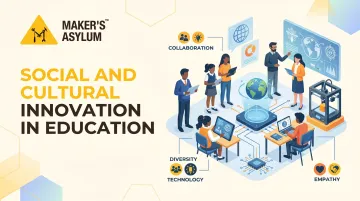
This tension sits at the heart of modern education: is its purpose to preserve and transmit knowledge, or to transform learners into people capable of building a better world? Social and cultural innovation in education argues for the latter. It's not about adding tablets to classrooms or rebranding curricula — it's about fundamentally rethinking who holds power in the learning process, what counts as valuable knowledge, and how we prepare the next generation not just to survive the future, but to shape it.
This article explores what social and cultural innovation in education actually means, why it's urgent now, what it looks like when it works, and how learners and institutions can begin shifting the culture of how learning happens.
TLDR:
- Social innovation in education introduces new methods that improve learning outcomes and equity; cultural innovation shifts underlying values from passive consumption to fearless experimentation
- Traditional education systems designed for industrial-era compliance fail to develop the creative thinking, adaptability, and collaboration skills employers and global challenges demand
- Evidence-backed principles include real-world problem-solving, collaboration over competition, normalizing failure, interdisciplinary STEAM integration, and community-as-curriculum
- Maker education and project-based learning deliver measurable gains — including 8-10 percentage point increases in AP scores and stronger social-emotional skills
- Resistance stems from entrenched assessment regimes, fixed-mindset cultures, and institutional risk-aversion, but can be overcome through deliberate culture change before curriculum change
What Is Social and Cultural Innovation in Education?
Social innovation in the education context refers to new approaches, methods, or models that address social challenges, improve learning outcomes, and create more equitable, relevant, and participatory educational experiences. It's distinct from purely technological change (adding tablets) or administrative restructuring (rebranding departments). The core question is how to design learning experiences that solve real problems for real people.
Cultural innovation in education involves shifting the underlying values, norms, and behaviors within a learning environment — moving from a culture of passive consumption, fear of failure, and rigid hierarchy to one of curiosity, collaboration, and fearless experimentation. It's the difference between a classroom where students fear mistakes and one where breaking things to understand them is celebrated.
These two concepts are deeply connected. Social innovation introduces new structures — project-based learning, maker spaces, community partnerships — but cultural innovation determines whether those changes actually take root and sustain.
A school can install a makerspace, but if the surrounding culture still punishes failure and rewards only individual performance, that space won't transform learning.
Together, they require a shift in:
- Who holds power in the learning process (from teacher-centered to learner-centered)
- Who sets the agenda (from standardized benchmarks to real-world challenges)
- What counts as valuable knowledge (from content recall to problem-solving capacity)
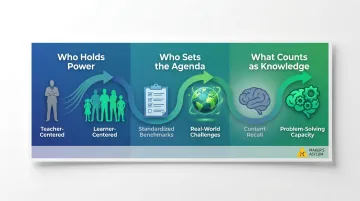
Purpose-driven learning sits at the center of this shift. Socially and culturally innovative education orients toward real-world challenges — not abstract academic exercises — and treats learners as active contributors rather than passive recipients.
When students tackle problems that matter to their community or the planet, engagement deepens and skills transfer because the work carries genuine meaning.
Why Education Systems Need This Kind of Innovation Now
The Skills Gap Is Widening — Fast
The World Economic Forum's Future of Jobs Report 2025 surveyed over 1,000 global employers representing more than 14 million workers. Their finding: 39% of current worker skills will be disrupted by 2030. The top skills rising in importance — analytical thinking, resilience, creative thinking, technological literacy — are precisely the competencies that traditional, test-focused education rarely develops.
Traditional education systems were designed for industrial-age economies — built around following instructions, memorizing procedures, and performing standardized tasks. Today's demands look entirely different:
- Critical thinking and adaptability over rote recall
- Collaborative problem-solving over individual performance
- Open-ended challenges over exam preparation
India's Learning Crisis: High Enrollment, Low Quality
The India Skills Report 2026 reveals that only 56.35% of graduates are considered employable, meaning nearly half lack the skills employers actually need. Project-based hiring has grown approximately 40%, signaling that employers increasingly value hands-on experience over degrees alone.
The numbers behind that employability gap are striking. ASER 2024 data shows that while enrollment for ages 6-14 stands at 98.1%, only 23.4% of Std III government school children can read a Std II-level text. High enrollment masks a severe learning-quality crisis driven by rote pedagogy that prioritizes memorization over understanding.
Global Challenges Demand New Kinds of Learners
Climate change, inequality, and rapid technological disruption require a generation of learners who can think across disciplines and act with agency — not just recall information. The UN Sustainable Development Goals explicitly require education to produce engaged, capable citizens who can tackle interconnected global problems.
UNESCO reports that 273 million children and young people were out of school worldwide in 2024 — 1 in 6 school-age children excluded entirely. Hands-on, participatory learning models have proven more effective at bringing disengaged youth back into education, particularly for those who have already been failed by conventional instruction.
That exclusion problem runs deeper than access. Even when students stay enrolled, classrooms often drive out the very qualities needed to address these global challenges.
The Cultural Dimension: Classrooms That Suppress Innovation
Curricula are only part of the problem. The culture of many classrooms actively suppresses the qualities needed for innovation — risk-taking is penalized, mistakes are treated as shameful, and individual performance is valued over collective creation.
Fjortoft (2018) documents that standardized testing has generated a "dreary culture of incessant competition" that teaches students "there is only one right answer," directly suppressing creativity and divergent thinking.
India's context makes this particularly sharp. Highly standardized, exam-oriented education leaves little room for exploration, yet the scale of social challenges demands exactly the kind of creative, collaborative problem-solvers that hands-on, purpose-driven education produces.
India's National Education Policy 2020 explicitly mandates this shift, calling for pedagogy that is "experiential, holistic, integrated, inquiry-driven, discovery-oriented, learner-centred, discussion-based, flexible, and enjoyable". The policy alignment exists — implementation is the bottleneck.
Core Principles That Define Social and Cultural Innovation in Education
Principle 1 — Learning Through Real-World Problem Solving
Socially innovative education grounds learning in authentic challenges. When students work on problems that actually matter — to their community, to the planet — engagement deepens and skills transfer in ways that classroom drills rarely achieve.
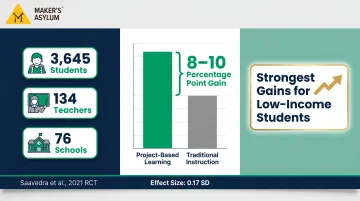
A landmark randomized controlled trial (Saavedra et al., 2021) tested project-based learning across 3,645 students taught by 134 teachers in 76 schools. Students in project-based classrooms scored 8-10 percentage points higher on AP exams compared to traditional instruction, with an effect size of 0.17 standard deviations. The gains were strongest for students from low-income households, demonstrating that rigorous, real-world learning can close achievement gaps.
Real-world problem-solving works because:
- Students see the purpose of what they're learning
- Challenges are complex enough to require creativity and iteration
- Solutions can be tested and improved based on feedback
- Success is defined by impact, not just grades
Principle 2 — Collaboration Over Competition
Shifting from individual rankings to collective creation changes both learning outcomes and the social dynamics of a classroom. Peer learning, shared projects, and cross-cultural dialogue build skills that no solo assignment can replicate.
A 2025 meta-analysis by Boke et al. examined 40 studies covering 3,985 students and found cooperative learning produced a moderate positive effect (g = 0.459) compared to traditional methods. The strongest impact appeared in social learning (g = 0.612) — teamwork, empathy, interpersonal skills — confirming that collaboration builds competencies unachievable through individual work.
Collaborative learning environments:
- Distribute cognitive load across team members
- Build communication and conflict-resolution skills
- Mirror real-world professional environments
- Create accountability through peer relationships
Principle 3 — Fearless Experimentation and the Right to Fail
A culture of innovation cannot exist where mistakes are punished. Normalizing iteration — make, break, improve — changes students' relationship with challenge and builds the psychological safety needed for genuine creativity.
Yeager et al. (2019, Nature) conducted a national experiment across 12,490 ninth-graders in 65 U.S. schools. A short growth mindset intervention improved lower-achieving students' GPAs by 0.10 grade points — but only in schools with supportive peer norms. The intervention required an enabling environment, not just individual belief change. Belief alone doesn't shift behavior — the surrounding culture has to make it safe to try, stumble, and try again.
Creating cultures of fearless experimentation involves:
- Celebrating failed prototypes as learning milestones
- Using language that normalizes iteration ("version 1," not "wrong answer")
- Assessing process and documentation, not just final products
- Modeling vulnerability and learning from mistakes as educators
At Maker's Asylum in Goa, students work in a space where the motto "Make. Break. Create!" appears on walls, t-shirts, and project documentation. This linguistic and visual framing transforms destruction from something to avoid into an essential part of the learning journey.
Principle 4 — Interdisciplinary and STEAM-Integrated Thinking
That psychological safety to experiment also opens up something else: the freedom to think across disciplines. Social and cultural challenges don't fit neatly into single subjects, and innovative education reflects that — weaving together science, technology, art, engineering, and social understanding to produce learners who can connect ideas across domains.
The National Academies of Sciences (2018) published extensive evidence that integrating arts, humanities, and STEM disciplines enhances creativity, critical thinking, and communication. A systematic review by Aguilera and Ortiz-Revilla (2021) found that both STEM and STEAM approaches showed positive effects on student creativity — the key is integrated, interdisciplinary instruction, not siloed discipline teaching.
Interdisciplinary learning:
- Reflects how real problems are structured (complex, multi-faceted)
- Develops flexible thinking that transfers across contexts
- Encourages students to draw on diverse knowledge bases
- Prepares learners for careers that don't yet exist
Principle 5 — Community as Curriculum
Learning environments that embed students in a genuine community of practitioners — mentors, peers, professionals, makers — provide a richness of context that no textbook can replicate. Watching an engineer prototype, collaborating with a designer, or getting feedback from a working founder gives learners something more durable than instruction: firsthand experience of how knowledge actually gets used.
The OECD Learning Compass 2030 critiques the "industrial form of schooling" where "students were often expected to be passive participants" and advocates for student agency, co-agency (collaboration with peers, teachers, families), and transformative competencies. Learning becomes a social, relational process.
Community-driven learning:
- Provides diverse role models and career pathways
- Creates networks of support and accountability
- Offers authentic feedback from practitioners
- Develops social capital alongside technical skills
What This Looks Like in Practice
Concrete examples of social and cultural innovation in education share a common trait: learners solve real problems, not simulations.
Living labs, maker spaces, and project-based cohorts create environments where students design solutions to challenges they care about. The most effective examples integrate hands-on making, interdisciplinary thinking, and community engagement.
Maker's Asylum's Innovation School and SDG School operate at scale as examples of this model. Students from 40+ countries and 50+ cities engage in purpose-driven, hands-on STEAM education — building portfolios, prototyping solutions, and developing a confident, curious problem-solver identity that traditional schooling rarely cultivates.
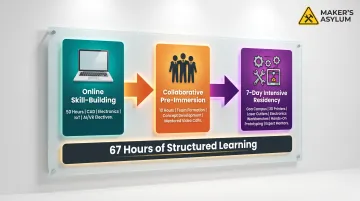
The Innovation School program combines 50 hours of self-paced online skill-building (CAD, electronics, IoT, and electives in AI or VR) with 10 hours of collaborative pre-immersion calls and a 7-day intensive residency in Goa. Students work with mentors to transform project concepts into functional prototypes in a resource-rich environment featuring 3D printers, laser cutters, electronics workbenches, and woodworking tools.
Real projects from students include:
- IoT air quality monitoring circuits teaching soldering and environmental sensor integration
- Gesture-controlled drones demonstrating human-machine interaction design
- River cleanup boats addressing environmental sustainability with OSHWA-certified open-source hardware
During the COVID-19 pandemic, Maker's Asylum demonstrated the power of maker education producing social impact: the community delivered over one million face shields in just 49 days to frontline workers, showing how hands-on skills translate directly to real-world problem-solving.
Inside the Maker's Asylum Space
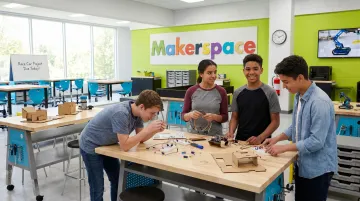
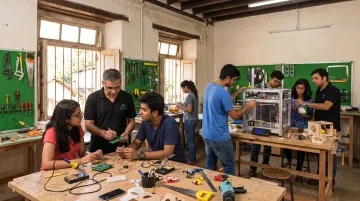
The physical space signals a different kind of learning culture. Maker's Asylum occupies a 100-year-old heritage home in Goa transformed into a vibrant makerspace with bright yellow walls adorned with past project photos. Workbenches are arranged for group collaboration, tools are openly accessible (not locked away), and colorful shelving displays materials invitingly.
Red rowboat seating and natural lighting from large windows create a playful, human-centered atmosphere that contrasts sharply with institutional environments.
Mentors work alongside students — no podiums, no separation — so knowledge flows horizontally rather than top-down. At any given moment, one group might be soldering circuits, another designing prototypes in CAD, and a third assembling a robotic vehicle. The space runs on collaborative energy, and failure is visible, expected, and normalized.
The SDG School takes this further by focusing explicitly on sustainability and social innovation aligned with UN Global Goals. Students work on challenges ranging from gender equality (modular community spaces for adolescent girls) to clean water (water-efficient toilet systems) to responsible consumption (upcycling pharmaceutical waste). 2,000+ alumni have completed 300+ social innovation projects across 40+ nations — proof that purpose-driven making travels well beyond any single classroom or country.
Why Traditional Education Resists This Shift
Structural and Cultural Barriers
Several forces push back against change — even when innovation programs are well-designed:
- Teacher-centered pedagogies entrenched over decades
- Standardized assessment regimes that reward compliance over creativity
- Institutional risk-aversion to unproven methods
- The persistent perception that hands-on learning is "less rigorous"
Even the strongest programs fail if the surrounding culture — school leadership, parent expectations, peer dynamics — stays unchanged.
Fjortoft (2018) documents a direct institutional conflict: accreditation standards now mandate both creativity assessment and standardized benchmarking simultaneously. These goals work against each other. Traditional assessment rewards "one right answer" analytical thinking, while innovation demands divergent thinking with multiple valid approaches — the two rarely coexist comfortably inside the same grading rubric.
Psychological Resistance: Teachers and Students
Both teachers and students have often been trained into fixed-mindset patterns. Teachers fear losing authority when shifting from lecturing to facilitating. Students fear being wrong without a clear "right answer" to fall back on. Innovation in education requires unlearning as much as learning.
The Brookings Institution notes that despite OECD policy ideals promoting student agency and interdisciplinary learning, "the shift from policy ideals to everyday classroom realities has been slow and inconsistent."
External Pressures Toward Uniformity
Social and political pressures often push education systems toward uniformity and measurability, making it harder to justify approaches whose outcomes are rich but harder to quantify — creativity, confidence, collaborative capacity. These competencies are critical for life and career success, yet they don't fit neatly into standardized tests.
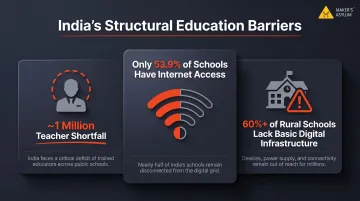
In India, this problem cuts even deeper. The country faces a teacher shortfall of approximately 1 million, with only 53.9% of schools having internet access and over 60% of rural schools lacking basic digital infrastructure. When structural gaps are this wide, cultural resistance doesn't have to work very hard.
How to Build Environments That Enable Social and Cultural Innovation in Learning
Start with Culture Before Curriculum
Before introducing any new method or tool, institutions and educators should audit the existing learning culture:
- Is failure safe here?
- Is collaboration rewarded?
- Do students have genuine agency?
Invest in shifting these norms intentionally before adding new programs on top of old assumptions. Cultural change must precede structural change.
Research at Ohio University found that 77% of students reported collaboration studios motivated them to learn, and over 90% felt 21st-century learning spaces better supported collaborative learning and instructor-student interactions compared to traditional classrooms. Physical environment matters, but only when it aligns with cultural values.
Design for Community and Co-Creation
The physical, social, and digital environment matters a great deal. Spaces that invite collaboration signal to learners that a different kind of learning is possible:
- Roundtables over rows
- Labs over lecture halls
- Shared tools over individual workstations
- Open storage of materials (trust and accessibility)
- Natural light, plants, and comfortable seating alongside technical equipment
The Brookings 6Cs framework covers collaboration, communication, content mastery, critical thinking, creative innovation, and confidence. It calls for learning environments that are "active rather than passive; engaging without being distracting; meaningful by connecting to real-world contexts; socially interactive; iterative; and joyful."
Maker's Asylum was built on this same design philosophy. At its Goa makerspace, the culture of making, breaking, and creating is embedded in how the space functions day-to-day — and that continuity of culture is what makes the learning stick.
Commit to Long-Term Practice, Not One-Off Interventions
Social and cultural innovation in education is not a workshop or a hackathon — it's a sustained practice. Institutions that produce lasting change invest in:
- Ongoing mentor relationships (not guest speakers)
- Iterative project cycles (not single assignments)
- Community belonging that accumulates over time
- Documentation and reflection as core practices
Maker's Asylum's hybrid model demonstrates this clearly. Each cohort runs across 6 months and 120 hours total: 50 hours of online skill-building, 10 hours of collaborative pre-immersion, then a 7-day intensive residency. Skills and mindset develop gradually, then accelerate through immersion.
The organization's commitment to equity reinforces this long-term approach. Maker's Asylum offers 50+ scholarships annually, with up to 90% need-based support for SDG School. Partnerships with The Akanksha Foundation, Ummat Foundation, and Panah Communities extend access to underserved youth. True innovation requires removing financial barriers alongside cultural ones.
Frequently Asked Questions
What is social and cultural innovation?
Social innovation creates new approaches to social challenges; cultural innovation shifts the values and behaviors that underpin them. In education, the two reinforce each other — changing not just what students learn, but how and why learning happens.
What is the function of education in social and cultural innovation?
Education is both a site and a driver of social and cultural innovation. It shapes the values and mindsets of future generations, producing individuals who can imagine and build better systems rather than simply reproduce existing ones.
How can schools foster a culture of innovation?
Key levers include normalizing failure as part of learning, enabling student agency and voice, designing for collaboration over competition, and connecting learning to real-world challenges that students actually care about. Cultural change must come before curriculum change.
What is the role of hands-on learning in social innovation?
Hands-on learning builds the practical confidence and problem-solving habits that social innovation requires. When learners make real things that address real problems, they develop agency, resilience, and cross-disciplinary thinking that abstract instruction rarely produces.
What is an example of social innovation in education?
Maker's Asylum's Innovation School and SDG School are operational examples: students work collaboratively on real challenges, blurring the line between learning and contributing. Other models include living labs, community makerspaces, and peer learning platforms built around SDG-aligned problems.
How does maker education support cultural innovation in schools?
Maker education shifts the dominant culture of a learning environment from passive consumption and fear of error to active creation and fearless experimentation — a cultural change that spreads beyond individual projects and reshapes how learners see themselves and their capacity to solve problems.