What are the 4 types of social innovation?
A common way to group social innovation is into product innovation, service innovation, process innovation, and systemic innovation. Product innovation creates tangible tools or solutions, service innovation improves how support is delivered, process innovation changes how work gets done, and systemic innovation addresses larger structures or behaviors. Strong student programs often expose learners to all four through real projects.
What are social innovations?
Social innovations are new ideas, methods, products, or models designed to solve social or environmental challenges more effectively than existing approaches. They focus on meaningful impact, not just novelty. For students, social innovation often involves identifying a real problem, researching users, building prototypes, testing ideas, and improving solutions through collaboration and feedback.
Who is this program best suited for?
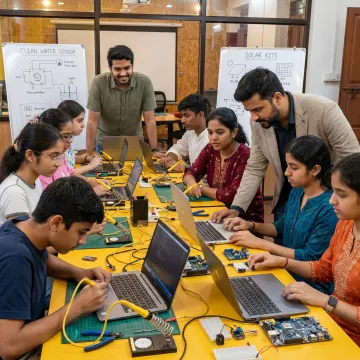
This type of program is ideal for curious students, teens, and young changemakers who want to solve real-world problems through hands-on learning. It is especially valuable for learners interested in STEM, design, sustainability, entrepreneurship, or community impact. Prior technical experience is not always required; curiosity, commitment, and willingness to experiment matter most.
Do students need prior technical skills to join?
No, prior technical expertise is not necessarily required for entry into beginner-friendly innovation programs. Many learners start with curiosity and build skills in design, electronics, prototyping, documentation, and problem-solving over time. Structured mentorship, guided projects, and modular learning help students progress from basic concepts to more confident making and innovation practice.
What kinds of projects can students build?
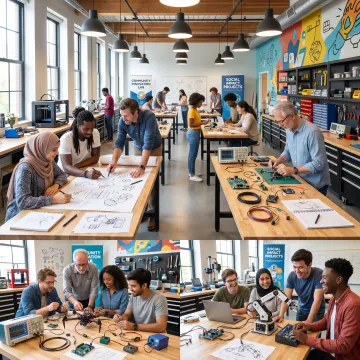
Students may work on projects involving electronics, IoT, hardware prototypes, digital fabrication, design concepts, or interdisciplinary solutions tied to real-world needs. Depending on the program, projects can range from interactive devices and assistive concepts to sustainability-focused builds and community-centered prototypes. The emphasis is on turning ideas into testable, documented outcomes.
How does hands-on learning support future college applications?
Hands-on innovation programs help students create tangible evidence of initiative, creativity, and problem-solving. Instead of only listing interests, learners can present documented projects, prototypes, reflections, and portfolios that show how they think and build. This can strengthen applications for universities that value interdisciplinary learning, maker culture, engineering readiness, and authentic extracurricular depth.
How long does the learning journey usually take?
Program length varies by format. Short modular courses may run for around 10 hours, while more comprehensive pathways like Innovation School extend across several months with guided learning, mentorship, and immersion components. This layered structure gives students time to build skills, refine ideas, and produce stronger final outcomes rather than rushing through surface-level activities.
Are scholarships or flexible payment options available?
For selected programs, Maker's Asylum offers partial scholarships based on need and merit, along with EMI options through partnered banks. Scholarship availability may depend on intake stage and program type, so applicants should review current terms carefully. This structure can make deeper, project-based innovation learning more accessible for families planning longer-term educational investment.