Which country is best to study in Europe as an international student?
The best country depends on your goals, budget, language preferences, and subject area. Many international students compare factors such as visa rules, living costs, academic reputation, and internship access. Short courses can be a smart way to test a learning style or field before committing to a full degree. Programs with practical projects and mentorship also help students build stronger portfolios for future applications.
Which course is best for 3 months?
A strong 3-month course usually combines practical skill building, mentorship, and a clear outcome such as a project portfolio. For students interested in STEM, design, or innovation, modular maker courses in CAD, electronics, fabrication, or immersive project-based learning are especially valuable. The best option is one that matches your academic interests while giving you tangible work to show universities or future employers.
Are these short courses suitable for international students?
Yes. Maker's Asylum programs are open to both Indian and international learners and are designed to support flexible participation. The learning model emphasizes hands-on projects, mentorship, and globally relevant skills, making it useful for students exploring study abroad pathways, portfolio development, or practical enrichment before university. The organization also has an alumni network spanning more than 40 countries.
Do I need prior technical experience to join?
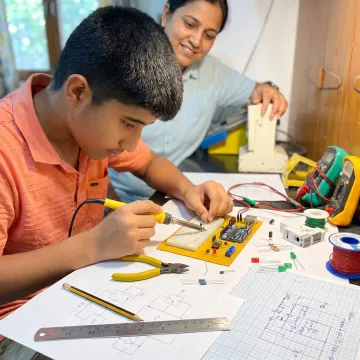
No prior technical background is required for many of the short courses. Several programs are built for curious beginners and focus on guided, project-based learning rather than advanced theory. Students are introduced to tools, workflows, and concepts step by step, which makes the courses accessible to teenagers, first-time makers, and learners exploring STEM or design for the first time.
What subjects can I study in a short course?
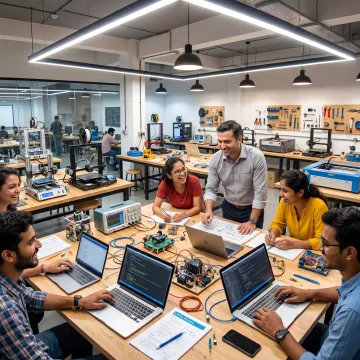
Students can explore a range of practical subjects including woodworking, CAD design, electronics, PCB design, IoT, drone engineering, virtual reality, and laser cutting with 3D printing. These subjects are especially useful for learners interested in engineering, product design, digital fabrication, and applied technology. Each course focuses on building real skills through guided projects rather than passive classroom-only instruction.
How long are the short courses?
Course lengths vary by program. Many Maker Skills courses run for 10 hours in a live format with a flexible weekly schedule, while immersive experiences may last 3 to 5 days. The Innovation School follows a longer hybrid structure over 6 months with 120 total hours, combining self-paced learning, mentorship, and an onsite immersion. This range helps students choose based on time and goals.
Will I receive a certificate or portfolio outcome?
Yes, students can gain meaningful outcomes from participation. Programs are designed around hands-on projects, and some include certificates as well as portfolio-building opportunities. This is especially valuable for international students preparing for university applications, extracurricular profiles, or future STEM pathways. Instead of only completing coursework, learners finish with documented projects and practical evidence of their skills.
Can short courses help with university applications?
Short courses can strengthen university applications when they demonstrate initiative, skill development, and real project work. Programs like Innovation School are especially useful because they help students build a college-ready maker portfolio through mentorship and interdisciplinary projects. Admissions teams often value applicants who can show curiosity, problem-solving, and applied learning beyond standard academics, particularly in STEM and design-related fields.