What is a school innovation development project for experiential learning?
A school innovation development project is a structured, hands-on learning initiative that helps students solve problems by designing, building, testing, and presenting real projects. Instead of relying only on theory, students engage with tools, materials, and guided mentorship across areas like electronics, design, fabrication, and STEAM. The result is deeper understanding, stronger collaboration, and practical portfolio-ready outcomes.
Which age groups can participate in these experiential learning programs?
Maker's Asylum programs are especially well suited for students aged 13 and above, including middle school and high school learners. Specific formats such as Maker Immersion are recommended for grades 7-12, while Innovation School is designed for teenagers aged 13-18. Program structure, complexity, and project scope can be aligned to the school's student cohort and learning goals.
What kinds of skills do students learn through the project?
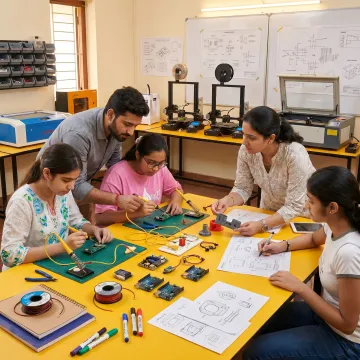
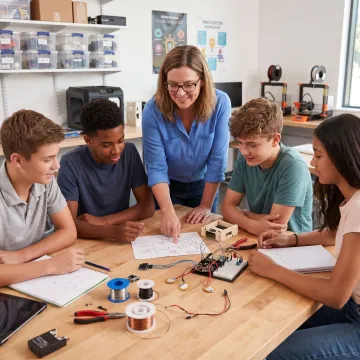
Students develop both technical and transferable skills. Depending on the program, they may learn electronics, IoT, CAD, laser cutting, 3D printing, woodworking, drone engineering, or virtual reality. Alongside these, they build problem-solving, teamwork, documentation, presentation, and iterative thinking skills. This combination helps learners become more confident, creative, and capable in real-world project environments.
Do students need prior technical experience to join?
No prior technical experience is required for most programs. Maker's Asylum emphasizes curiosity, motivation, and willingness to experiment over existing expertise. Foundational concepts are introduced through guided, project-based learning, making the experience accessible to beginners. Students gradually build confidence as they work with mentors, hardware kits, and structured activities that move from basic understanding to practical application.
How are these programs delivered to schools?
Programs can be delivered in multiple formats depending on the school's needs. Maker's Asylum offers online, offline, and hybrid models, including live sessions, self-paced learning, hardware-kit-based activities, and onsite immersions. Schools can choose shorter experiential formats such as 3-5 day immersions or longer structured journeys that combine skill building, mentorship, prototyping, and final showcases.
What outcomes can schools expect from an innovation project?
Schools can expect visible, meaningful outcomes such as student-built prototypes, stronger engagement, improved collaboration, and better understanding of applied STEM concepts. Learners also gain documentation and presentation experience, which supports portfolio development and future academic pathways. For schools, these programs strengthen experiential learning delivery while giving students a more active, inquiry-driven educational experience.
Can the program be customized for our curriculum or school objectives?
Yes. Maker's Asylum's modular approach makes it possible to align projects with school priorities, student age groups, and desired learning outcomes. A school may focus on innovation exposure, pre-engineering, design thinking, or specific technical domains such as electronics or fabrication. The structure, duration, and module mix can be shaped to support enrichment, interdisciplinary learning, or future-readiness goals.
How long does a school experiential learning project usually take?
Program duration can vary based on format and depth. Short immersions may run for 3-5 days, while more comprehensive journeys such as Innovation School extend over several months with a mix of self-paced learning, live mentorship, and immersion experiences. Schools can choose a timeline that fits their academic calendar while still ensuring students have enough time to build, test, and reflect.