What is the Internet of Things course about?
The Internet of Things course introduces students to connected devices through practical projects using microcontrollers, lights, sensors, and basic electronics. Instead of focusing only on theory, the course emphasizes building interactive prototypes, understanding how hardware and code work together, and developing confidence through guided experimentation. It is designed for learners who want hands-on exposure to real making and prototyping workflows.
Which IoT course is best?
The best IoT course is one that matches a student's age, learning style, and goals while offering real project work instead of only lectures. Maker's Asylum stands out for its hands-on format, live instruction, hardware kit support, and maker-led teaching approach. Students build working projects, learn core electronics and microcontroller concepts, and gain practical prototyping experience that can support future STEM learning and portfolio development.
Who is this IoT course designed for?
This course is designed for students and young makers who want to explore technology through practical building. It is especially suitable for learners interested in electronics, coding, robotics, and product prototyping. No advanced technical background is required, making it accessible for beginners who are curious, motivated, and ready to learn through hands-on projects rather than passive instruction.
Do students need prior coding or electronics experience?
No prior coding or electronics experience is required to begin. The course is structured to introduce foundational concepts step by step, including components, sensors, microcontroller programming, and interactive project building. Students learn through guided activities and facilitated projects, which helps beginners gain confidence while still giving enough practical depth to keep motivated learners engaged throughout the program.
What kinds of projects will students build?
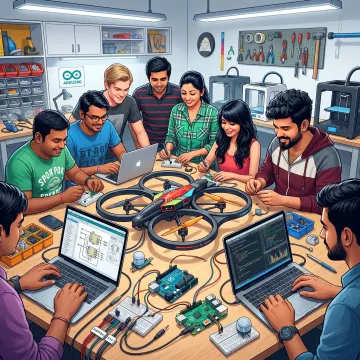
Students work on hands-on projects involving lights, sensors, microcontrollers, and interactive systems. These builds are designed to teach how connected devices respond to inputs and perform actions in the physical world. Depending on the learning pathway, students may also explore related prototyping areas such as electronics, PCB design, CAD, and digital fabrication to strengthen both technical understanding and product-thinking skills.
How long is the IoT course and what is the schedule?
The Maker Skills Internet of Things course runs for 10 hours in a live format, with a flexible schedule and a recommended commitment of 2 to 3 hours per week. This structure makes it manageable for students balancing school and extracurriculars. Learners also complete four facilitated hands-on projects, allowing them to apply concepts steadily rather than rushing through the material.
Is hardware included in the course?
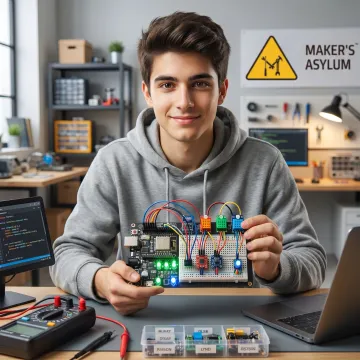
Yes, the program includes a hardware kit sent home to support project-based learning. This allows students to build, test, and troubleshoot with real components rather than relying only on simulations. Working with physical hardware is a major advantage because it helps learners understand wiring, sensors, outputs, and prototyping challenges in a much more practical and memorable way.
Can this course help with future STEM studies or portfolios?
Yes, hands-on IoT learning can support future STEM pathways by helping students develop technical confidence, problem-solving ability, and documented project work. Maker's Asylum emphasizes learning by making, which means students create tangible outcomes they can discuss in applications, interviews, or future coursework. For learners seeking a broader portfolio-building pathway, related programs like Innovation School offer additional mentorship and interdisciplinary project development.