Which project is best for ECE students?
The best project for ECE students is one that combines core electronics with a clear real-world use case. IoT projects such as smart monitoring systems, sensor-based automation, or connected safety devices work especially well because they involve circuits, microcontrollers, programming, and testing. They also demonstrate practical engineering thinking, which is valuable for portfolios, internships, and academic presentations.
What are some good IoT projects?
Good IoT projects include smart home automation modules, environmental monitoring systems, motion-based alert devices, connected lighting controls, attendance systems, and sensor-driven safety solutions. Strong student projects usually include data collection, a microcontroller, sensor integration, and a practical output. The most effective builds are simple enough to complete well but meaningful enough to show applied electronics and problem-solving skills.
Yes, IoT is commonly taught within ECE because it builds on electronics, embedded systems, sensors, communication, and microcontroller programming. In many academic settings, students learn the theory first and then apply it through mini projects. Hands-on project work is especially important because it helps students understand integration, debugging, prototyping, and how electronic systems behave in practical applications.
Do I need advanced coding skills to start an IoT mini project?
No, advanced coding skills are not required to begin. Many beginner-friendly IoT projects start with basic microcontroller programming, simple sensor inputs, and straightforward output actions such as LEDs, buzzers, or motors. A structured hands-on program can help students learn coding gradually while also understanding circuits, components, and testing methods, making the learning process more approachable and practical.
How long does it take to complete an IoT mini project?
A basic IoT mini project can often be completed within 10 to 20 guided learning hours, depending on complexity. Simpler builds such as sensor-triggered systems take less time, while projects involving enclosures, PCB design, or multiple modules take longer. Maker's Asylum's short-format skills programs are designed to help learners make meaningful progress within manageable weekly schedules.
Can these projects help with college applications or internships?
Yes, well-documented IoT projects can strengthen college applications, internship profiles, and technical portfolios. They show that a student can apply electronics concepts, build prototypes, solve practical problems, and communicate outcomes clearly. Projects become even more valuable when they include testing, iteration, photos, circuit logic, and a clear explanation of the real-world problem being addressed.
What hardware is commonly used in beginner IoT projects?
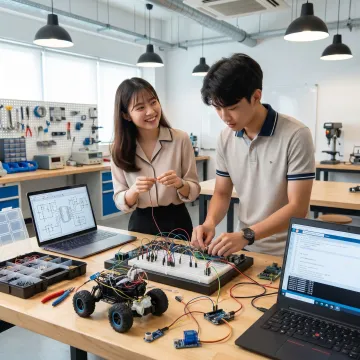
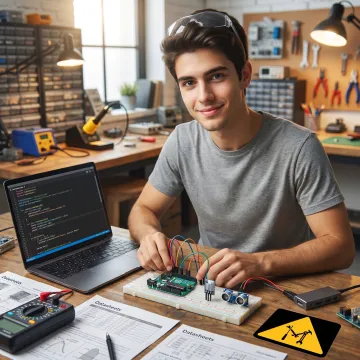
Beginner IoT projects commonly use microcontrollers such as Arduino-compatible boards, along with sensors, LEDs, buzzers, jumper wires, breadboards, and simple actuators. As projects become more advanced, students may add PCB design, custom enclosures, or fabrication elements. Starting with accessible hardware helps learners focus on understanding system behavior before moving into more complex integrations and polished prototypes.
How do I choose the right IoT project topic?
Choose a topic that matches your current electronics level and solves a clear, relatable problem. Good project topics often come from everyday needs such as monitoring temperature, automating lights, tracking movement, or improving safety. The best choices balance feasibility and usefulness, allowing you to complete a working prototype while still demonstrating circuit design, programming, and practical engineering application.