What are the principles of experiential learning theory?
Experiential learning theory centers on learning through direct experience, reflection, conceptual understanding, and active experimentation. Instead of only receiving information, learners engage in meaningful tasks, review what happened, identify insights, and apply those lessons in new situations. This cycle helps build deeper understanding, stronger retention, practical judgment, and confidence because knowledge is connected to action rather than memorization alone.
What is hands-on learning in practice?
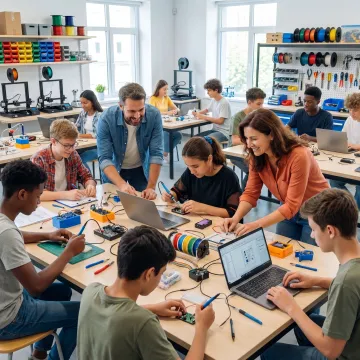
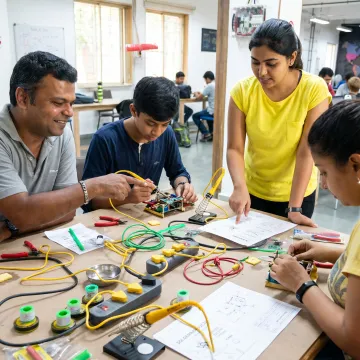
Hands-on learning means learners actively create, test, build, or solve something as part of the learning process. In practice, that can include prototyping a product, assembling electronics, designing in CAD, woodworking, or documenting a project from concept to outcome. The key difference is participation: learners gain understanding by doing the work, making decisions, and learning from results.
Who benefits most from experiential education?
Experiential education benefits a wide range of learners, including teenagers exploring STEM pathways, educators seeking applied teaching methods, lifelong learners building practical skills, and students preparing portfolios for university applications. It is especially valuable for curious learners who thrive when ideas become tangible. Because it combines action with reflection, it supports both technical growth and soft skills like collaboration and resilience.
How is experiential learning different from traditional classroom teaching?
Traditional classroom teaching often emphasizes lectures, fixed content delivery, and assessment through recall. Experiential learning shifts the focus toward participation, problem-solving, and reflection. Learners engage with tools, materials, and real challenges, then analyze outcomes and improve their approach. This makes learning more active and contextual, helping students understand not just what something is, but how and why it works in practice.
Can beginners succeed in hands-on maker programs?
Yes. Strong experiential programs are designed so beginners can start with curiosity rather than prior technical expertise. Structured mentorship, guided projects, hardware kits, and modular skill-building help learners progress step by step. At Maker's Asylum, many programs emphasize exploration, experimentation, and confidence-building, allowing participants to develop practical ability over time while learning how to document and present their work clearly.
What skills do learners develop through experiential programs?
Learners typically develop a blend of technical and transferable skills. Technical areas may include electronics, CAD, fabrication, prototyping, programming, or woodworking depending on the program. Just as important, they build problem-solving, communication, collaboration, documentation, creative confidence, and adaptability. Because projects involve real decisions and iteration, learners also gain the judgment needed to move from ideas to workable outcomes.
How do projects improve learning outcomes?
Projects improve learning outcomes by giving learners a concrete reason to apply concepts, make decisions, and evaluate results. When someone builds a prototype or completes a fabrication task, they encounter real constraints, mistakes, and improvements. That process strengthens retention and understanding because the learning is tied to action. Projects also create visible evidence of progress, which boosts motivation and supports portfolio development.
What should I look for in a quality experiential learning program?
Look for programs that combine guided mentorship, meaningful projects, reflection, access to tools or kits, and opportunities to document outcomes. A strong program should move beyond one-off activities and help learners build skills progressively. It is also helpful when the environment encourages experimentation, collaboration, and real-world relevance. Programs with experienced makers or educators often provide stronger support and clearer learning pathways.